Anritsu Bit Error Rate Testers (BERTs): Ensuring High-Speed Digital Communication Integrity
Welcome to Revinetech's premium category...
Anritsu Bit Error Rate Testers (BERTs): Ensuring High-Speed Digital Communication Integrity
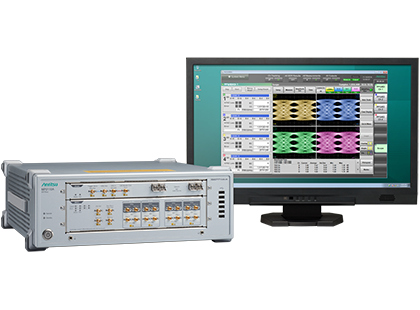
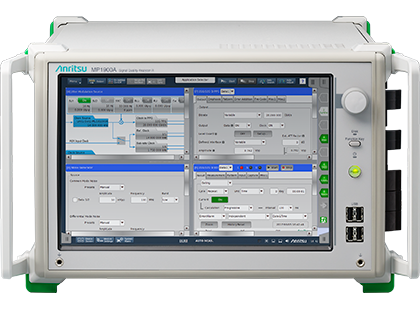
Welcome to Revinetech's premium category for Anritsu Bit Error Rate Testers (BERTs). As data rates accelerate and communication standards become more complex (e.g., 5G, PCIe, Ethernet), accurately measuring signal integrity is paramount. Anritsu BERTs are globally recognized as the essential instrument for generating and analyzing high-quality digital data streams, ensuring the reliability and performance of active components, transmission lines, and entire digital communication systems.
You are seeking a high-performance, precision instrument to quantify the error rate in your high-speed digital designs. Our selection features the complete range of Anritsu BERTs and Sampling Oscilloscopes, offering unmatched capabilities in noise analysis, jitter tolerance testing, and comprehensive eye pattern analysis. Trust Revinetech to provide the genuine Anritsu BERT that delivers the speed, accuracy, and detailed diagnostic insight necessary for validating next-generation telecommunications and computing infrastructure.
Why Anritsu BERTs are Critical for Digital System Validation
In high-speed electronics, the smallest degradation in signal quality can lead to millions of data errors. Anritsu BERTs are designed to stress-test digital systems beyond typical operating conditions, verifying performance margins and ensuring robust data transmission. The instrument's ability to precisely generate and analyze signals is critical for product success in today’s demanding digital landscape.
Mastering the Bit Error Rate (BER) Measurement
The primary function of a BERT is to measure the Bit Error Rate (BER), which is the number of erroneous bits received relative to the total number of bits transmitted. This measurement is crucial because:
-
Quantifies Reliability: BER provides a single, quantitative metric of the quality and reliability of a digital communication link, directly impacting system throughput and longevity. Engineers establish system performance by measuring BER against specific industry targets.
-
Stress Testing: Anritsu BERTs allow engineers to deliberately degrade the signal (by adding jitter or noise) to determine the device’s tolerance margin—a process critical for product validation. The BERT finds the device’s failure point, verifying robust design.
-
Compliance Verification: Tests are performed to ensure devices meet stringent industry standards (e.g., OIF, IEEE) and communication protocols. Certified testing often requires the precision only Anritsu provides.
Integrated Jitter and Eye Diagram Analysis
High-speed signal integrity challenges are almost always linked to jitter (unwanted timing variations). Anritsu instruments integrate advanced analysis tools to diagnose these issues:
-
Jitter Measurement: Precise characterization and decomposition of various jitter types (Random Jitter (RJ), Deterministic Jitter (DJ)) allow engineers to pinpoint the source of timing errors. The instrument separates noise components, identifying the root cause quickly.
-
Eye Pattern Analysis: Generating and analyzing the eye diagram provides a visual metric of signal quality. Anritsu’s high sensitivity ensures accurate measurement of eye height and width, which correlate directly to noise margin and timing margin. A clean, open eye indicates a reliable signal path.
-
Receiver Testing (Rx): Crucial for testing the sensitivity and tolerance of receiver circuits (Rx) to degraded signals, a mandatory step in modern transceiver validation. The BERT generates stressed signals to check the receiver’s ability to recover data.
Anritsu BERT Product Lines for High-Speed Applications
Anritsu offers specialized BERTs and related instruments tailored to the specific data rates and complexities of modern communication standards. The modular design approach guarantees flexibility and future-proofing.
High-Speed Pulse Pattern Generators (PPGs) and Error Detectors (ED)
These modular systems combine the capabilities of a highly stable signal source and a precise error detector, covering data rates essential for core network and high-performance computing applications:
-
Data Rate Flexibility: Offering broad continuous data rates, often from a few Gb/s up to 100 Gb/s and beyond, essential for 400G and 800G Ethernet testing. The wide range supports various communication interfaces.
-
Low Intrinsic Jitter: The generated test patterns have extremely low inherent jitter, ensuring that any measured degradation is from the Device Under Test (DUT), not the instrument itself. Clean signal generation guarantees test accuracy.
-
Wide Pattern Support: Capable of generating standard compliance patterns (e.g., PRBS, Square Wave) and complex user-defined patterns for comprehensive stress testing. Pattern choice dictates the stress applied to the system.
Sampling Oscilloscopes and Signal Quality Analyzers (SQA)
Often used in conjunction with BERTs, Anritsu Sampling Oscilloscopes provide the high-bandwidth visualization necessary for physical layer diagnostics:
-
High Bandwidth: Allows for the accurate capture and display of extremely fast rise times and subtle waveform distortions. The high-speed capture reveals tiny signal flaws.
-
Time Domain Reflectometry (TDR): Integrated TDR functionality enables the precise location and characterization of impedance discontinuities in high-speed transmission lines and PCBs. This helps engineers find physical defects fast.
-
Automated Measurements: Built-in software automatically performs industry-standard measurements like Jitter RMS/P-P and Eye Mask Margin testing, speeding up compliance reporting. The oscilloscope verifies the output quality against the standard.
Key Integrated Features for Testing Efficiency
Anritsu BERTs are designed with features that streamline the complex process of physical layer testing, enhancing speed and accuracy. The focus remains on making advanced testing accessible and efficient.
-
Simplified Calibration: Automated calibration routines simplify the complex process of deskewing and configuring the test channels for accurate measurement. Calibration setup time shrinks dramatically.
-
Connectivity and Automation: Full support for industry-standard communication interfaces (GPIB, Ethernet) is essential for integrating the BERT into large, automated wafer-level or production test systems. Remote control allows seamless data acquisition.
-
Error Location Analysis: Advanced features allow the instrument to map the exact timing location of received errors, providing crucial data for diagnosing pattern-dependent issues. Detailed error mapping guides system debugging.
-
Remote Control: Dedicated software allows for comprehensive remote control and data transfer, simplifying collaboration and post-analysis reporting. Data can be analyzed instantly by experts globally.
Selecting the correct Anritsu Bit Error Rate Tester requires careful consideration of maximum required data rate, the necessity of integrated jitter analysis, and the required test pattern complexity. Revinetech is your authorized source for the complete lineup of Anritsu digital test equipment. Our technical specialists are ready to assist you in matching the certified performance and feature set of the right Anritsu BERT to your specific R&D or manufacturing validation demands.
Guarantee the integrity of your high-speed links. Browse our catalogue of Anritsu Bit Error Rate Testers today, compare the best solutions for digital signal integrity and jitter analysis, and contact us for expert advice and a personalized quote.
Frequently Asked Questions (FAQs)
What is a Bit Error Rate Tester (BERT) used for?
A BERT is used to measure the reliability of a high-speed digital communication link. It sends a known, controlled stream of data (test pattern) through a device or system and then compares the received data to the original pattern, counting the number of errors to calculate the Bit Error Rate (BER).
What is the significance of the "eye diagram" in BERT testing?
The eye diagram is a visual representation of a digital signal's quality captured by the BERT or sampling oscilloscope. The vertical opening of the "eye" relates to the noise margin, and the horizontal opening relates to the timing margin (jitter tolerance). A wide, open eye indicates a healthy signal.
Why is jitter testing crucial for high-speed systems?
Jitter testing is crucial because timing variations (jitter) reduce the signal’s effective timing margin. An Anritsu BERT allows engineers to measure a system's tolerance to various types of jitter, ensuring the digital system can reliably decode data even under adverse timing conditions.
What is PRBS, and why is it used in BERTs?
PRBS stands for Pseudo-Random Binary Sequence. It is a specific, mathematically defined test pattern used in BERTs that appears random but is actually repeatable. It is used because it stimulates the digital system with a wide range of frequencies and bit combinations, effectively mimicking real-world data traffic for comprehensive testing.
Can Anritsu BERTs test different communication standards?
Yes. Anritsu BERTs are highly versatile and are essential tools for validating components used in a wide range of standards, including various generations of Ethernet, Fiber Channel, PCIe, and high-speed memory interfaces, by providing the required compliance patterns and measurement capabilities.