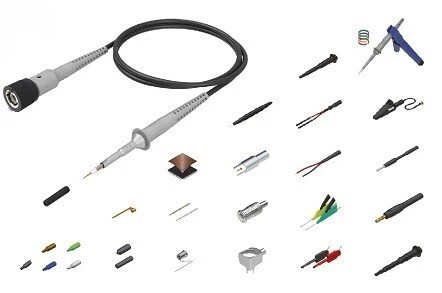
PMK Passive Probes: Versatile, Reliable Measurement for General Electronics
Welcome to Revinetech's dedicated category for PMK Passiv...
PMK Passive Probes: Versatile, Reliable Measurement for General Electronics
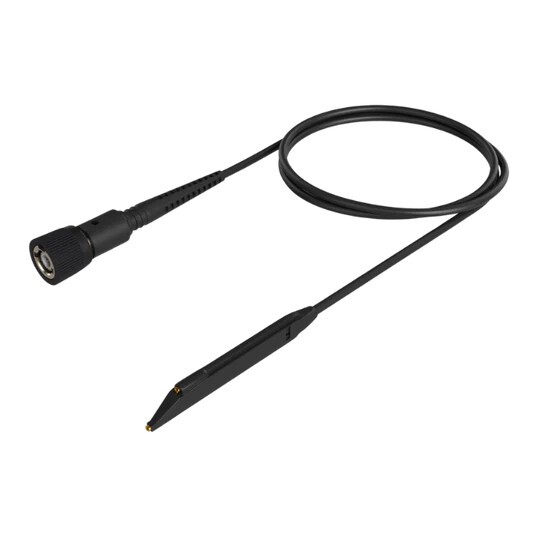
Welcome to Revinetech's dedicated category for PMK Passive Probes. The passive probe is the fundamental tool in every electronics lab, providing a simple, robust, and cost-effective connection between the test circuit and the oscilloscope. PMK passive probes are meticulously engineered to deliver superior signal fidelity, wide compensation range, and rugged construction, making them the ideal choice for general-purpose debugging, repair, educational use, and high-frequency measurements that do not require active amplification.
You are seeking reliable, general-purpose probes that offer flexibility, ease of use, and dependable attenuation for a wide range of voltages and bandwidths. Our selection features the complete range of PMK passive solutions, including standard high-impedance probes, low-capacitance designs, and high-voltage attenuators. Trust Revinetech to provide the genuine PMK passive probe that delivers certified precision, long-term durability, and the essential versatility required for daily electronic testing and troubleshooting.
Why PMK Passive Probes Are Essential for Versatile Debugging
Passive probes remain the backbone of oscilloscope measurement due to their simplicity, robustness, and ability to operate without the need for external power supplies. PMK enhances this reliability with superior component selection and design.
Reliability and Cost-Effectiveness
The core strength of PMK passive probes lies in their straightforward, low-maintenance design:
-
No External Power Required: Passive probes draw all necessary energy directly from the measured signal, eliminating the need for batteries or external power supplies, simplifying bench setup.
-
Rugged Construction: Built with durable materials and simple internal circuitry, they withstand the frequent handling and physical wear-and-tear of daily lab use, ensuring a long service life.
-
Cost-Effective Solution: For measurements that do not require the ultra-low capacitance or high bandwidth of an active probe, the PMK passive probe offers the most economical solution with guaranteed quality.
Signal Compensation and Accuracy
PMK ensures its passive probes provide accurate signal representation across various oscilloscopes:
-
Wide Compensation Range: Probes feature an adjustable compensation network, allowing them to be accurately matched and optimized to the input capacitance of virtually any oscilloscope from all major manufacturers, ensuring accurate signal reproduction.
-
High Input Impedance: Standard passive probes (typically $10\text{ M}\Omega$) minimize the probe's loading effect on the circuit under test for most low-frequency or high-voltage measurements.
-
Versatile Attenuation: Available with standard attenuation ratios (e.g., 10:1) to extend the voltage measurement range and optimize the signal-to-noise ratio.
Exploring the PMK Passive Probe Categories
Our catalogue features the specialized lines of PMK passive probes, categorized by their bandwidth, voltage rating, and application focus.
General Purpose Passive Probes (Standard 10:1)
These are the indispensable tools for routine debugging, fault isolation, and component characterization:
-
Standard Use: Ideal for general-purpose voltage measurements up to several hundred MHz, suitable for educational labs and most analog/digital repair work.
-
Wide Voltage Range: Providing safe measurement capability across typical circuit voltages.
-
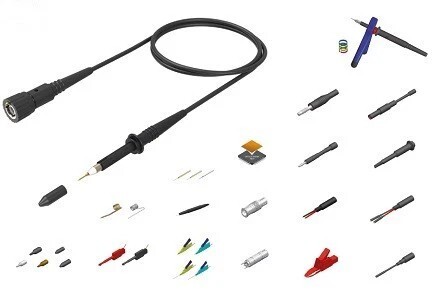
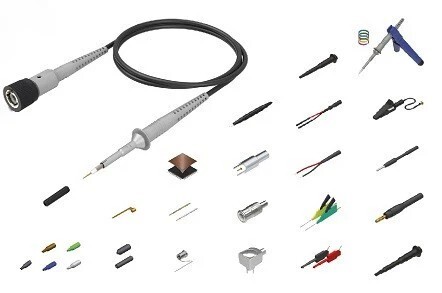
Robust Accessories: Supplied with a complete set of standard accessories, including interchangeable tips, ground leads, and adjustment tools.
Low Capacitance Passive Probes
These probes are engineered to reduce the typical capacitive loading effect of standard passive probes:
-
Reduced Loading: Specialized designs minimize the input capacitance, making them suitable for probing higher frequency circuit nodes where standard passive probes would cause signal degradation or overshoot.
-
Improved Bandwidth: Offering a wider frequency response than general-purpose probes, allowing for the capture of moderately fast rise times and higher frequency components.
High Voltage Passive Probes
These probes prioritize user safety for high-power applications:
-
Certified Safety: Built with robust, multi-layer insulation and high attenuation ratios (e.g., 100:1, 1000:1) to safely reduce voltages up to 10 kV or higher, protecting the user and the oscilloscope input.
-
Rugged Construction: Designed for the physical demands and safety requirements of industrial power systems and high-voltage testing.
Integrated Features for Reliable Measurement
PMK probes incorporate features that streamline workflow, improve safety, and ensure accurate data acquisition.
-
Automatic Probe Identification: Select probes feature coding that communicates the attenuation ratio to compatible oscilloscopes, ensuring the voltage display is automatically scaled correctly.
-
Safety and Ergonomics: Constructed with high-quality insulation and designed for comfortable, reliable handling in demanding environments.
-
Calibration Ports: Integrated compensation screws allow technicians to quickly and accurately match the probe to the oscilloscope input capacitance.
Partner with Revinetech for PMK Passive Probe Assurance
Selecting the ideal PMK Passive Probe requires assessing the required bandwidth, the maximum expected voltage (DC or RMS), and the necessary attenuation ratio. Revinetech is your authorized source for the complete PMK probe portfolio. Our technical specialists are ready to assist you in matching the certified reliability, high accuracy, and versatile construction of the right PMK passive probe to your specific testing and troubleshooting demands.
Achieve reliable, versatile measurement for everyday electronics. Browse our catalogue of PMK Passive Probes today, and contact us for expert advice and a personalized solution.
Frequently Asked Questions (FAQs)
What is the primary advantage of a passive probe over an active probe?
The primary advantage is simplicity and durability. Passive probes require no external power, are generally more robust and less susceptible to physical damage, and are significantly more cost-effective for use in general-purpose, non-high-speed measurements.
Why must I compensate a passive probe before using it?
You must compensate the probe to precisely match its electrical capacitance to the input capacitance of the oscilloscope channel you are using. This adjustment ensures that the probe accurately transmits both low-frequency and high-frequency components of the signal, preventing signal distortion (such as overshoot or rounding).
What does a 10:1 attenuation ratio mean for a passive probe?
A 10:1 attenuation ratio means the probe reduces the input voltage by a factor of ten. If you measure a 10-volt signal, the oscilloscope input receives 1 volt. This extends the voltage range of the oscilloscope and improves the signal's impedance (from $1\text{ M}\Omega$ to $10\text{ M}\Omega$).
When should I choose a low capacitance passive probe?
You should choose a low capacitance passive probe when probing high-frequency signals (hundreds of MHz) or sensitive, high-impedance circuit nodes. The reduced capacitance minimizes the loading effect of the probe on the circuit under test, providing a more accurate measurement than a standard passive probe.
Are PMK passive probes suitable for high-voltage measurements?
Yes. PMK offers specialized high voltage passive probes with high attenuation ratios (e.g., 100:1 or 1000:1) and robust insulation, making them suitable and safe for measuring voltages up to several kilovolts, provided the voltage rating is not exceeded.