PMK Optically Isolated Probes: Ultimate Safety and Fidelity for Floating Measurements
Welcome to Revinetech's elite category for PMK...
PMK Optically Isolated Probes: Ultimate Safety and Fidelity for Floating Measurements
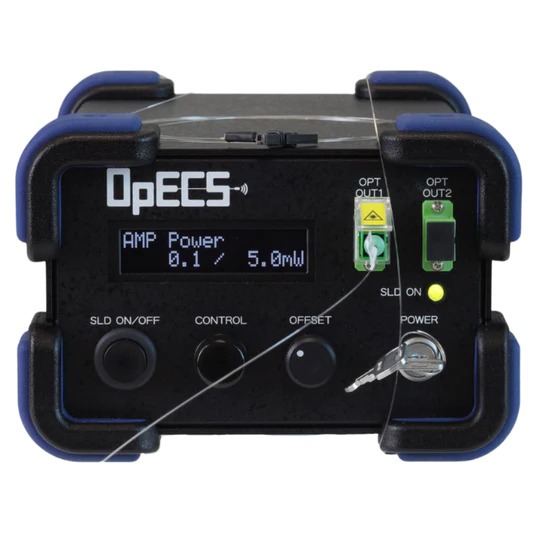
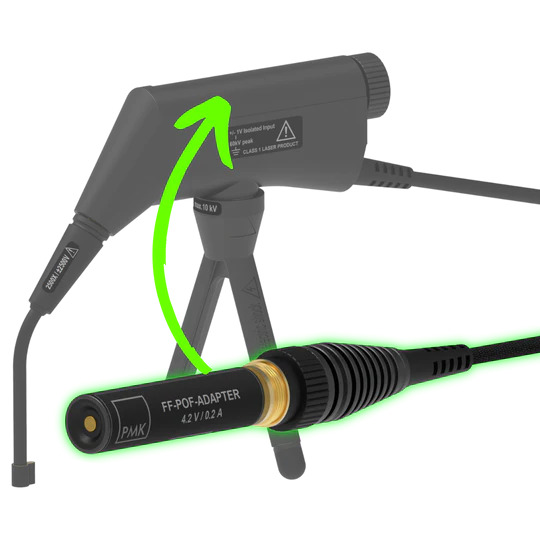
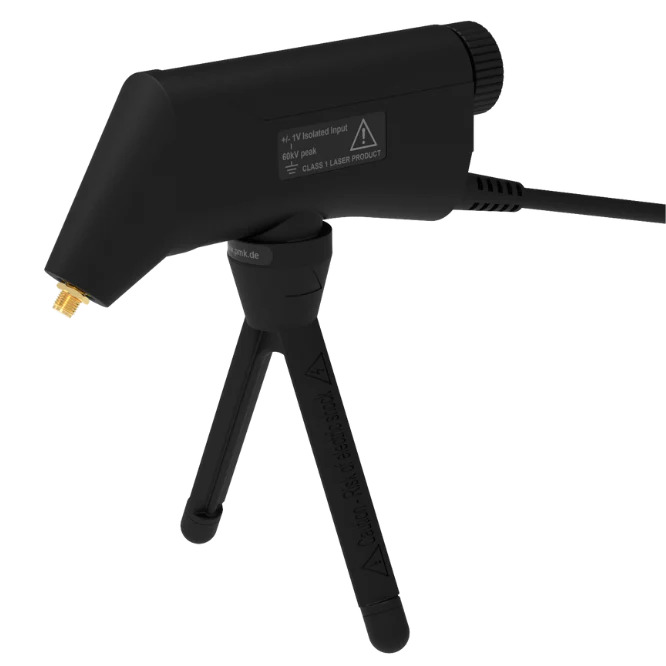
Welcome to Revinetech's elite category for PMK Optically Isolated Probes. In the most demanding electrical test environments—including high-voltage power electronics, SiC/GaN semiconductor characterization, and sensitive floating measurements—achieving absolute electrical isolation is mandatory for safety and measurement integrity. PMK optically isolated probes represent the pinnacle of probing technology, utilizing fiber optic transmission to achieve a complete, non-electrical separation between the test circuit and the oscilloscope input.
You are seeking the highest level of safety, complete common-mode noise elimination, and superior bandwidth for measuring high-voltage signals. Our selection features the complete range of PMK isolated probes, designed for ultra-high common-mode voltage rejection and reliable performance with standard oscilloscopes. Trust Revinetech to provide the genuine PMK optical probe that delivers certified protection, unparalleled signal fidelity, and the essential safety barrier required for your advanced power, defense, and research applications.
Why PMK Optically Isolated Probes Are the Safest Choice
Unlike traditional differential probes that rely on electrical components for isolation (which can still have breakdown limits), optically isolated probes offer a pure, non-electrical pathway for the signal.
Absolute Isolation and Noise Immunity
The defining feature of a PMK optically isolated probe is the use of light to transmit the signal, providing unmatched benefits:
-
Complete Galvanic Isolation: The probe achieves total electrical separation between the measurement point and the oscilloscope ground. This eliminates the possibility of dangerous ground loops and provides guaranteed protection against extremely high common-mode voltages (often tens of thousands of volts).
-
Maximum Common-Mode Rejection: Since the signal transmission is optical, the probe effectively rejects all common-mode noise and interference. The Common Mode Rejection Ratio (CMRR) is exceptionally high, resulting in pristine, accurate differential measurements.
-
User Safety: This non-electrical link provides the ultimate safety barrier, protecting the operator and the oscilloscope from high-voltage hazards and transient events.
Superior Measurement Fidelity
PMK ensures that the optical technology maintains high performance necessary for analyzing fast-switching modern devices:
-
Wide Bandwidth and Fast Rise Time: Probes are engineered to support wide bandwidths and accurately capture the fast switching edges and transient details of modern power semiconductors (SiC, GaN).
-
Minimal Loading: The active circuitry at the probe tip ensures very low input capacitance, preserving the integrity and performance of the highly sensitive circuit under test.
-
High Dynamic Range: Provides precise measurement of both small differential signals riding on large common-mode voltages, essential for debugging control signals within high-side power circuits.
Exploring the PMK Optically Isolated Probe Categories
Our catalogue features the specialized lines of PMK optical probes, categorized by their maximum voltage rating, bandwidth, and input configuration.
High Bandwidth Power Probes
These probes are the workhorse for engineers dealing with high-speed switching power supplies, inverters, and motor drive testing:
-
Versatile Attenuation: Offering multiple gain settings to accommodate a wide range of input signal amplitudes.
-
High Voltage Ratings: Built with insulation necessary to safely handle the high common-mode voltages (up to 10 kV and beyond) found in industrial power converters.
-
Dedicated Power Supplies: Probes typically feature dedicated power modules or battery options to ensure stable operation of the active optical circuitry.
Probes for SiC/GaN Semiconductor Testing
These specialized probes are mandatory for characterizing the performance of next-generation power semiconductors:
-
Ultra-Fast Response: Designed for the extremely fast rise times and high-frequency harmonics generated by Silicon Carbide (SiC) and Gallium Nitride (GaN) devices, ensuring accurate switching loss calculations.
-
Low Noise Floor: The optical isolation inherently provides a very low noise floor, allowing for precise measurement of subtle signal details critical for performance optimization.
Integrated System Accessories
PMK offers various specialized probe types and accessories to enhance flexibility:
-
Tip and Adapter Kits: Specialized tip accessories (e.g., mini-clips, solder-in tips) that ensure a secure, safe, and low-inductance connection to complex or small surface-mount test points.
-
Calibration Support: Tools and routines to ensure the probe remains accurately calibrated and matched to the oscilloscope for guaranteed precision.
Integrated Features for Reliable Measurement
PMK probes incorporate features that streamline workflow, improve safety, and ensure accurate data acquisition.
-
Automatic Probe Identification: Select probes feature an automatic identification system that communicates the attenuation and offset settings to compatible oscilloscopes, guaranteeing the displayed voltage is correctly scaled.
-
Robust Construction: Built with durable materials and robust housing suitable for repeated use in demanding field and laboratory environments.
-
External Power Options: Providing flexibility through external power supplies or battery options for portable field diagnostics.
Partner with Revinetech for PMK Optical Probe Assurance
Selecting the ideal PMK Optically Isolated Probe requires assessing the maximum common-mode voltage, the required bandwidth for switching speed, and the necessary attenuation ratio. Revinetech is your authorized source for the complete PMK probe portfolio. Our technical specialists are ready to assist you in matching the certified protection, high CMRR, and precision performance of the right PMK probe to your specific power electronics and sensitive floating measurement demands.
Ensure the ultimate safety and purity of your high-voltage measurements. Browse our catalogue of PMK Optically Isolated Probes today, and contact us for expert advice and a personalized quote.
Frequently Asked Questions (FAQs)
What is the key advantage of optical isolation over electrical differential probing?
The key advantage is absolute galvanic isolation. Electrical differential probes have voltage breakdown limits, whereas PMK optically isolated probes use a light signal for transmission, providing complete electrical separation that eliminates ground loops and protects against extremely high common-mode voltages (often exceeding 10 kV).
Why are optically isolated probes essential for SiC and GaN testing?
Optically isolated probes are essential for SiC and GaN testing because these wide-bandgap semiconductors switch at extremely high speeds (fast rise times) and high voltages. The PMK optical probe provides the necessary wide bandwidth and minimal input capacitance to accurately capture these ultra-fast transients without loading the circuit or compromising user safety.
Does the probe's optical nature introduce signal delay?
While the signal travels through the optical path, the probe's electronic design compensates for this delay. The primary focus is maintaining high signal fidelity (accurate amplitude and phase response across the bandwidth), which PMK optical probes achieve with industry-leading precision.
Can these probes measure very small signals on top of large high-voltage levels?
Yes. The high Common Mode Rejection Ratio (CMRR) and high dynamic range inherent in PMK optical probes allow for the accurate measurement of small differential signals (like control or feedback signals) that are riding on top of a very large common-mode high voltage (like the bus voltage in an inverter).
How does the probe get power if the signal is transmitted optically?
The active components at the probe tip (for buffering and converting the electrical signal to light) are powered by a separate, isolated source. This power is usually supplied by a dedicated external AC/DC adapter, a special probe interface on the oscilloscope, or sometimes by internal batteries.